Learn to Play the Fife
A Beginner's Guide
The fife is one of the simplest instruments you can pick up — and one of the most rewarding. It's a small, keyless wooden flute with six holes and a sound that carries across open fields. Armies used it to signal commands. Communities used it to celebrate. Today, fifers carry on a tradition that stretches back to before the founding of the nation.
This guide will take you from "I've never touched a fife" to producing your first clear notes. No musical experience is assumed. If you can read this page, you can learn to fife.
What Is a Fife?
A fife is a transverse flute — meaning you hold it sideways and blow across a hole, rather than into one. It's smaller than a concert flute and has no keys or mechanical parts. The traditional fife has six tone holes and is made from hardwood (grenadilla, rosewood, or boxwood) with brass or nickel ferrules at each end.

Most fifes are pitched in the key of B♭, which is the standard for fife and drum corps. When you see "B♭ fife" in a shop listing, that's the one you want. The fife is a transposing instrument, which means the written notes don't match the concert pitch — but don't worry about that now. You'll learn to read fife music as written and let the instrument handle the rest.
Choosing Your First Fife
Start with an inexpensive plastic fife. The Cooperman black plastic fife is the community standard for beginners — it costs around $10–15, plays in the correct key of B♭, and sounds surprisingly good.
Don't spend $200+ on a wooden fife yet. You need to develop your embouchure (lip position and airstream control) before an expensive instrument makes any difference. A plastic fife is also more durable and unaffected by weather — both important when you're learning.
When you're ready to upgrade — typically after several months of playing — the major fife makers include Cooperman (Bellows Falls, VT), Healy Flute Company (Switzerland), Sweetheart/Musique Morneaux, and others. See our fife buying guide for detailed comparisons.
How to Hold the Fife
Hold the fife horizontally to your right, with the embouchure hole positioned at the center of your lips. Your left hand goes closest to the embouchure hole and covers the top three tone holes (holes 1, 2, and 3). Your right hand covers the bottom three (holes 4, 5, and 6). Use your fingertips, not the flat pads of your fingers.
Your left thumb rests underneath the fife for support, roughly opposite holes 1 and 2. Your right thumb goes underneath, roughly opposite holes 4 and 5. Keep your fingers curved, relaxed, and close to the holes even when they're lifted. Flapping fingers slow you down and introduce leaks.
Stand or sit up straight. Keep your shoulders relaxed and your elbows comfortably away from your body. The fife should be roughly parallel to the ground. Don't tilt it down — this changes the angle of your airstream and affects tone.
Making Your First Sound
This is the part that trips up most beginners, so be patient with yourself. The fife doesn't have a mouthpiece that does the work for you — you create the sound entirely with your lips and breath.
Start without the fife. Close your lips, then open them slightly in the center as if saying a gentle "poo." You're aiming for a small, focused opening — not a wide-open mouth. Now blow a steady stream of air across the back of your hand. You should feel a cool, narrow jet of air. That's your airstream.
Now pick up the fife. Don't cover any holes yet. Rest the near edge of the embouchure hole against the fleshy part of your lower lip, roughly where your lip meets the skin below it. The hole should be about one-quarter covered by your lip. Direct your airstream across the far edge of the hole — not down into it.
Roll the fife very slightly toward you or away from you until you hear a breathy note emerge. It might be weak and airy at first — that's completely normal. The goal right now is any tone at all. Once you find the sweet spot, hold it and try to sustain the note for as long as you can.
A few common mistakes: blowing too hard (you need less air than you think), opening your lips too wide (keep the aperture small and focused), and pressing the fife too firmly against your lip (a light touch works better).
Your First Notes
Once you can produce a steady tone with all holes open, you're ready to learn fingerings. The note you've been playing with all holes open is D (in fife notation). From here, each hole you cover lowers the pitch by one step.
Two Octaves of Fingerings
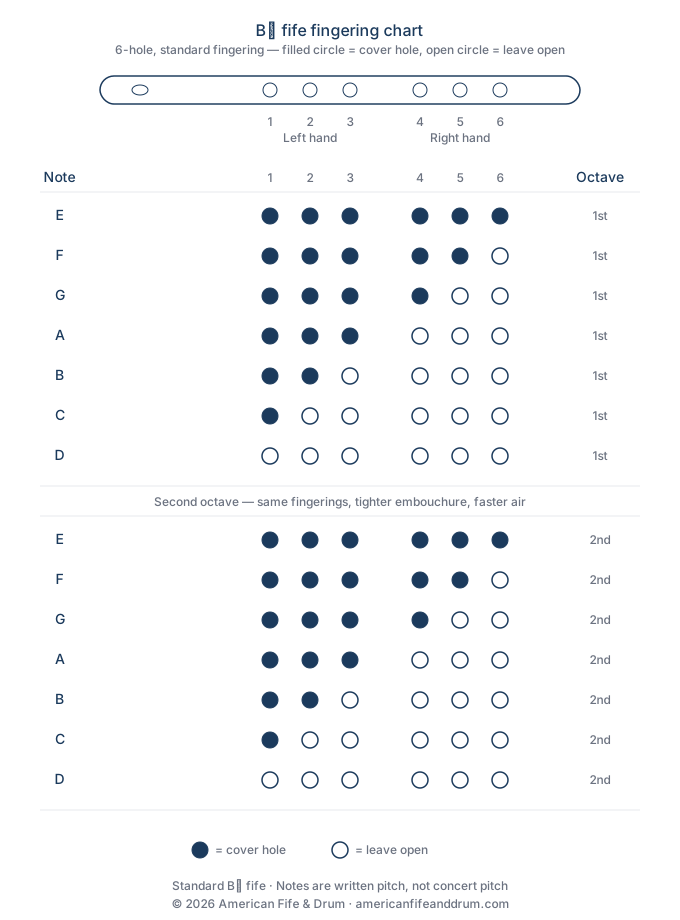
To start, begin practicing the first five notes in the middle register. These are D, C, B, A, and G in the first octave. Practice moving between these notes slowly. Play each note for four steady beats, then move to the next.
Focus on clean transitions — lift and place fingers crisply rather than sliding them. A common beginner problem is "squeaking" between notes because fingers don't move simultaneously.
Once these five notes feel comfortable, add F (cover holes 2 through 6) and E (cover all six holes). That gives you a full octave from E to D, which is enough to play your first tunes.
Your First Tunes
Most fifers learn Yankee Doodle as their first complete tune. It uses a small range of notes, has a familiar melody, and is central to the fife and drum tradition. Other good early tunes include When Johnny Comes Marching Home, The Girl I Left Behind Me, and Chester.
Don't try to play fast. Slow and clean beats fast and sloppy every time. Use a metronome (a free app on your phone works fine) set to around 60–80 BPM and focus on hitting each note clearly. Speed will come with practice.
If you can get your hands on a copy of the Company of Fifers & Drummers Music Book, it contains the standard repertoire that most corps play. The Village Volunteers also have a free online music library with audio recordings you can play along with. Check our resources page for links.
Practice Tips
Fifteen minutes a day is better than two hours once a week. Embouchure strength and finger muscle memory build through consistent, short sessions. Your lips will tire quickly for the first few weeks — that's normal. Stop when your tone starts to deteriorate rather than pushing through fatigue.
Practice long tones: hold each note for as long as you can with a steady, even sound. This builds breath control and tone quality faster than anything else. It's boring, and it works.
Practice in front of a mirror occasionally to check your embouchure position, hand placement, and posture. Small adjustments you can see often fix problems you can only hear.
When you're ready, record yourself and listen back. It can be humbling, but it reveals issues you don't notice in the moment — especially intonation problems and uneven rhythms.
Next Steps
Once you can play a few tunes cleanly, the best next step is finding other people to play with. Fife and drum is an ensemble tradition — the real joy is playing with a group. Search our corps directory, reach out, and show up to a rehearsal. Every corps we know welcomes beginners.
From here, you'll want to learn about the second octave (same fingerings, tighter embouchure and faster air), tonguing and articulation (using your tongue to start notes cleanly), and reading standard fife notation. We'll cover all of this in future guides.